
Dix ans cette année que Fief fait partie de ces projets que l’on retrouve avec un plaisir intact à chaque nouvelle sortie. Il faut dire que l’Américain n’a jamais vraiment cherché à bouleverser sa formule, et ce n’est certainement pas après six albums que l’on va commencer à lui en faire le reproche. Le très bon VI, sorti fin 2024, avait d’ailleurs rappelé ce que Fief savait encore tirer de sa vision délicieuse du dungeon synth, toujours avec cette approche assez intimiste du genre — quoi que de moins en moins avec le temps. Un an et demi plus tard, VII reprend assez naturellement les choses là où elles en étaient restées, avec tout de même quelques petites nouveautés au programme…
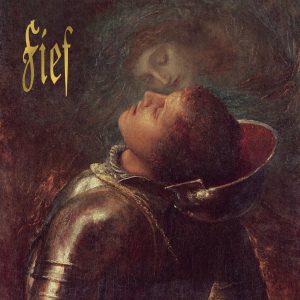 Fief ne s’est toutefois pas changé en Wydraddear au cours de la nuit. Les gimmicks de composition sont les mêmes, les motifs musicaux et les instrumentations également. Le goût de notre artiste pour les rythmiques légères et les mélodies polyphoniques est toujours aussi présent. De la part de n’importe quel artiste, on serait en droit de demander à voir autre chose, mais pas dans son cas. Fief est finalement un projet profondément conservateur, il m’est d’ailleurs avis que cela participe de son charme. Pourquoi bouleverser une formule qui fonctionne aussi bien ?
Le petit problème de VII se situe plutôt ailleurs. Fief nous a tous habitués à faire surgir des mélodies entêtantes avec une facilité franchement insolente, au point que l’on peut citer sans trop réfléchir plusieurs albums où les morceaux marquants s’enchaînent sans temps faible. C’est beaucoup moins évident ici, surtout dans la première moitié de l’album. « Pastourelle » et « My Peerless Blade » sont de bons titres, mais ils s’impriment moins durablement dans l’esprit. Chez Fief, cela finit forcément par se remarquer.
Cette première partie n’est pourtant pas dénuée d’intérêt, loin de là. Beaucoup d’artistes rêvent probablement d’être capables d’en faire autant. C’est même là que quelques nouveautés apparaissent dans la musique du projet américain. « Pastourelle » s’accompagne de field recordings qui donnent un peu plus de corps à son environnement, tandis que « Song of Some Deed or Other » laisse à entendre une petite ambiance de taverne, ou de quelque autre lieu suffisamment animé pour que l’on comprenne l’idée. Des détails, bien sûr, mais Fief n’avait jusqu’alors pas eu besoin de ce genre d’artifices pour donner vie à son univers.
Et mine de rien, ça accompagne assez bien la couleur générale de VII. La musique de Fief reste évidemment fidèle à ce mélange très fin de dungeon synth, de medieval fantasy et de musique de l’imaginaire qui a toujours fait son charme, avec cette approche intimiste, presque à hauteur d’homme. Mais quelque chose semble ici plus pastoral, plus villageois, parfois même franchement paysan. Rien de radical, simplement une nuance supplémentaire dans un univers que l’on prend un plaisir amusé à redécouvrir sur chaque nouvel album.
Le changement d’ambiance est plus marqué sur « Holy Ecstasy of the Cellarer », titre nettement plus recueilli, avant que « Echoes of the Apse » n’aille encore plus loin. Les samples de chants religieux, volontairement sous-produits, donnent à l’ensemble une dimension presque glauque et très étonnante pour du Fief. Difficile de ne pas penser à la démarche de DIM, lorsqu’il avait lui-même commencé à intégrer plus franchement le religieux à sa musique, même si Fief se montre ici plus discret.
Et puis arrive « Fool’s License! ». Nous y voilà, voici le Fief qui m’émeut le plus. Tambourins, rythmique entraînante, mélodies immédiates : le titre regroupe une bonne partie de ce que l’Américain sait faire de mieux. Dans le même registre, « Valley of the Bees » lui emboîte parfaitement le pas. On retrouve instantanément — quoiqu’un peu tard — ce qui rend Fief si enchanteur, en l’occurrence son sens de la mélodie facile. C’est sans doute ce qui empêchera à mes yeux VII de rejoindre III ou V (je me mouille) parmi les meilleurs albums du projet. Tout est propre, cohérent, très agréable à écouter, et les quelques nouveautés introduites ici ne dénaturent jamais la formule. Mais il y manque peut-être cette régularité mélodique presque arrogante qui fait la force des meilleures sorties de Fief.
Je vous vois venir, on ne va pas aller chouiner pour autant, loin s’en faut. VII reste un très bon album, simplement moins marquant que certains de ses prédécesseurs. Sa coloration plus bucolique et l’utilisation ponctuelle des samples lui donnent même une personnalité propre, ce qui n’est déjà pas si mal pour un artiste qui n’a jamais eu besoin de se réinventer. Fief reste Fief, et c’est très bien comme ça. S’il persiste à faire ne serait-ce qu’aussi bien, ne comptez pas sur moi pour m’en plaindre !
AI-generated translation. In our articles, we constantly strive to incorporate stylistic value to make our writing more vibrant and to best honor the music we analyze, but naturally, we are only capable of such a level of writing in French. Please keep in mind that some phrases and stylistic nuances might be altered by the tool.
Ten years this year since Fief became one of those projects whose every new release we greet with undiminished pleasure. It must be said that the American artist has never really sought to shake up his formula, and after six albums, we are certainly not about to start holding that against him. The excellent VI, released in late 2024, had indeed reminded us of everything Fief could still draw from his delightful vision of dungeon synth, always with that rather intimate approach to the genre—though increasingly less so as time goes by. A year and a half later, VII quite naturally picks things up where they left off, albeit with a few little novelties in store…
Fief has not turned into Wydraddear overnight, however. The compositional gimmicks remain the same, as do the musical motifs and instrumentation. Our artist’s fondness for light rhythms and polyphonic melodies is as present as ever. With just about any other artist, we might reasonably ask to hear something different, but not in his case. Fief is, ultimately, a deeply conservative project, and I would even argue that this is part of its charm. Why upset a formula that works so well?
The slight problem with VII lies elsewhere. Fief has accustomed us all to conjuring up heady melodies with frankly insolent ease, to the point that one can name, without thinking too hard, several albums where memorable tracks follow one another without a single lull. That is far less obvious here, particularly in the first half of the album. « Pastourelle » and « My Peerless Blade » are good tracks, but they leave a less lasting impression. With Fief, that inevitably ends up being noticeable.
This first half is by no means devoid of interest, far from it. Plenty of artists probably dream of being capable of as much. It is even here that a few new elements emerge in the American project’s music. « Pastourelle » comes with field recordings that lend a little more substance to its surroundings, while « Song of Some Deed or Other » lets us hear the atmosphere of a small tavern—or some other place lively enough for us to get the idea. Details, of course, but until now Fief had never needed such devices to bring his world to life.
And, come to think of it, they fit the overall character of VII rather well. Fief’s music obviously remains faithful to that finely balanced blend of dungeon synth, medieval fantasy, and music of the imagination that has always been part of its charm, with that intimate approach, almost at human level. But something here feels more pastoral, more village-like, at times even downright rustic. Nothing radical, merely another shade added to a world we take amused pleasure in rediscovering with each new album.
The shift in atmosphere is more pronounced on « Holy Ecstasy of the Cellarer, » a distinctly more contemplative track, before « Echoes of the Apse » goes even further. The deliberately underproduced samples of religious chanting give the whole thing an almost grim, rather startling quality for Fief. It is difficult not to think of DIM’s approach when he himself began incorporating religious elements more openly into his music, although Fief remains more discreet here.
And then comes « Fool’s License! » There we are: this is the Fief that moves me most. Tambourines, an infectious rhythm, immediate melodies—the track brings together much of what the American artist does best. In the same vein, « Valley of the Bees » follows in its footsteps perfectly. At once—if a little late—we rediscover what makes Fief so enchanting: namely, his effortless gift for melody. That is probably what, in my eyes, will keep VII from joining III or V—there, I’ve said it—among the project’s finest albums. Everything is polished, coherent, thoroughly enjoyable to listen to, and the few new elements introduced here never distort the formula. But it perhaps lacks that almost arrogantly consistent melodic brilliance that makes Fief’s best releases so strong.
I can already see you coming, but we are hardly going to start whining about it. VII remains a very good album, simply a less memorable one than some of its predecessors. Its more bucolic coloring and occasional use of samples even give it a personality of its own, which is already no small feat for an artist who has never needed to reinvent himself. Fief remains Fief, and that is perfectly fine by me. If he keeps making music even just this good, don’t count on me to complain!
